Production process -
how it’s made ?
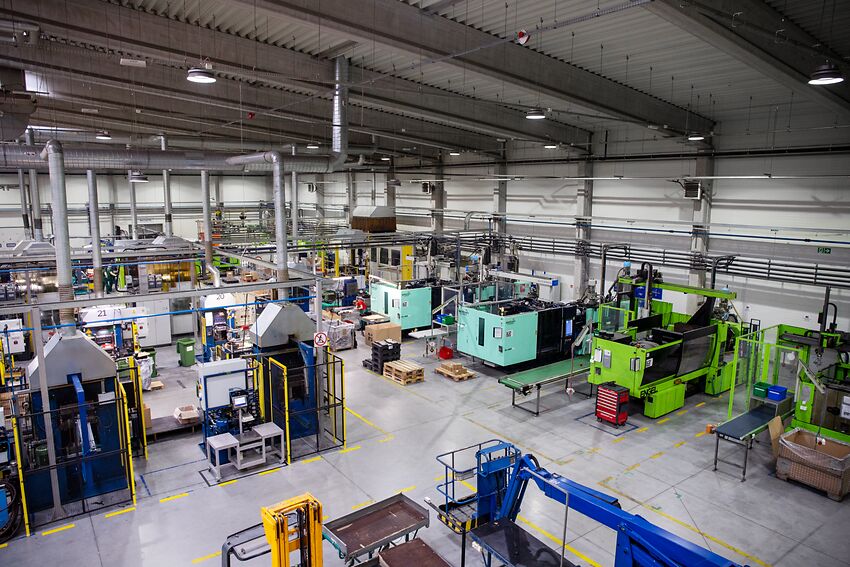
Jaeger Polska is a trusted partner in comprehensive processing of plastics, rubber, and assembly for the most demanding industries. We operate a modern machine park with machines of various clamping forces, enabling the production of both light, precise components and large structural elements. Our team of experienced technologists and engineers provides full support at every project stage — from feasibility analysis and optimal material selection to the implementation of stable, optimized serial production. What sets us apart is our holistic approach. We not only manufacture components but above all help clients create market-ready solutions.
Our expertise also includes the organization of production tooling — from tool selection and qualification to integration with the production line and ongoing maintenance. Thanks to modern quality-control methods, automation, and advanced know‑how, we offer production that combines technical excellence with cost efficiency.
Rubber parts manufacturing
The production of rubber components uses elastomer molding under the influence of temperature, pressure, and vulcanization time. Different molding technologies are selected depending on part type, tolerances, geometry, and quality requirements.
Compression Molding
Process Description:
The oldest and simplest rubber molding method:
- A precisely cut piece of rubber compound (pre-form) is placed into an open mold.
- The mold closes, compressing and heating the material.
- Pressure and temperature cause vulcanization inside the mold cavity.
- After opening the mold, the part is removed—usually without runners, with only minor flash.
- Applications:
- Simple shapes, large parts.
- Low-volume production or thick cross-sections.
- Advantages:
- Lowest mold cost.
- Very low material waste (no runner system).
- Suitable for large-size parts.
- Disadvantages:
- Longer cycle times.
- More challenging flash control.
- Lower precision and repeatability compared to injection molding.
Transfer Molding
Process Description:
Transfer molding combines elements of compression and injection molding.
- An accurately measured piece of rubber is placed in a transfer pot.
- When the mold closes, a plunger pushes the material through channels into the cavities.
- Vulcanization occurs inside the cavities.
- Parts are removed with runners, which are later trimmed.
- Applications:
- Complex geometries, thin walls.
- Precision parts requiring minimal porosity.
- Medium-volume production.
- Advantages:
- Better cavity filling than compression molding.
- Higher precision and repeatability.
- Disadvantages:
- Material waste from runners and transfer pot residue.
- Longer cycle time than injection molding.
Injection Molding
Process Description:
The most advanced and efficient method.
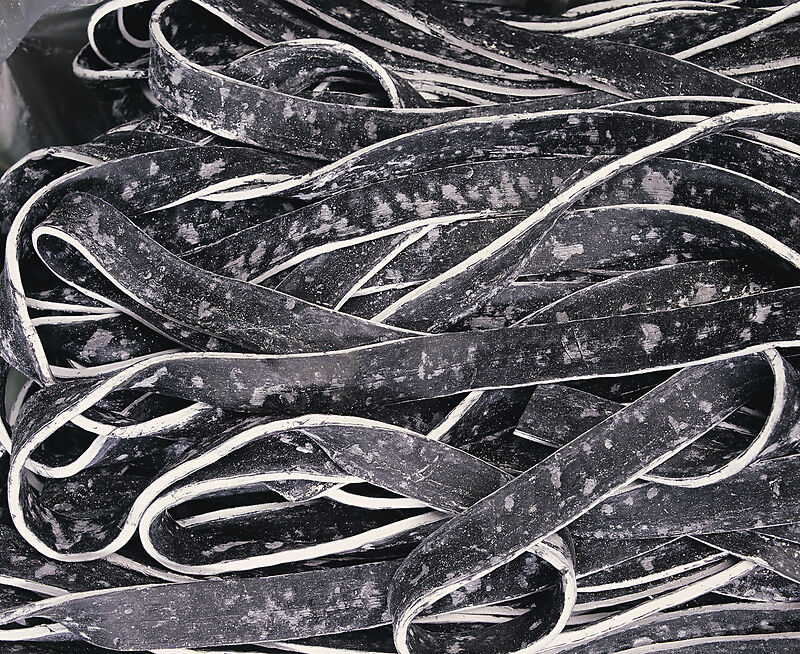
- Rubber compound (in strip or band form) is fed into the machine.
- A screw plasticizes the material and injects it under pressure into a hot mold.
- Vulcanization begins immediately upon entry.
- After vulcanization, the mold opens and the part is automatically ejected.
- Applications:
- Mass production.
- Small and medium-size parts requiring high precision.
- Details suitable for automation.
- Advantages:
- Shortest cycle times.
- High repeatability and reduced human error.
- Suitable for fully automated production.
- Disadvantages:
- Highest mold and machine cost.
- Material waste from runner systems.
Plastic parts manufacturing
Plastic Injection Molding
The production of plastic components is carried out using injection-molding technology. This process is similar to rubber injection molding; however, there are distinguishing factors such as the temperature of the injection unit, mold temperature, and cycle time.
Process Description:
The most precise and repeatable method of forming plastic materials
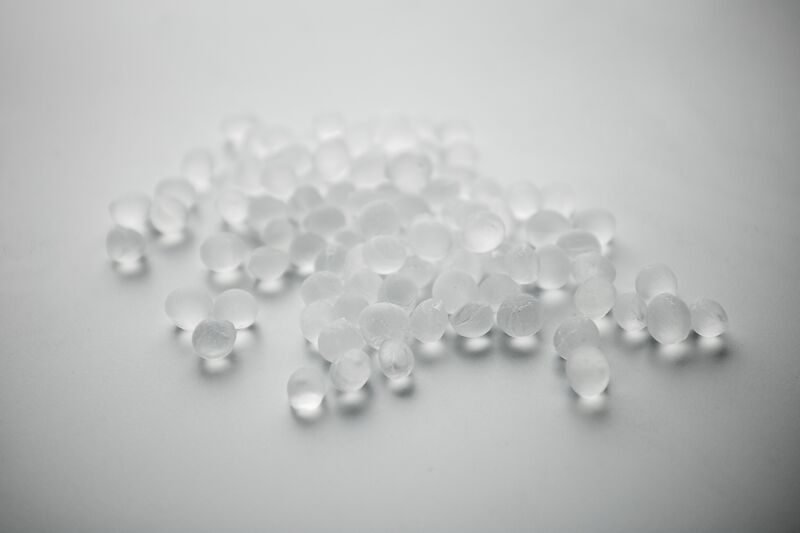
- Plastic granulate is fed into the injection unit, optionally pre‑dried or colored.
- Screw heats, mixes, and injects molten material into the closed mold.
- Cooled mold ensures solidification and final geometry.
- After cooling, the part is ejected.
- Applications:
- Medium- and high‑volume production.
- Medium- and high‑volume production.
- Technical components requiring automation.
- Advantages:
- Shortest cycles among plastic‑forming methods.
- High repeatability and stability.
- Fully automatable and easy to integrate with QC systems.
- High surface quality and complex shapes possible.
- Disadvantages:
- Higher tooling costs.
- Material waste from runner systems (depending on mold design).
- Need for precise parameter control.
Assembly & Supporting Processes
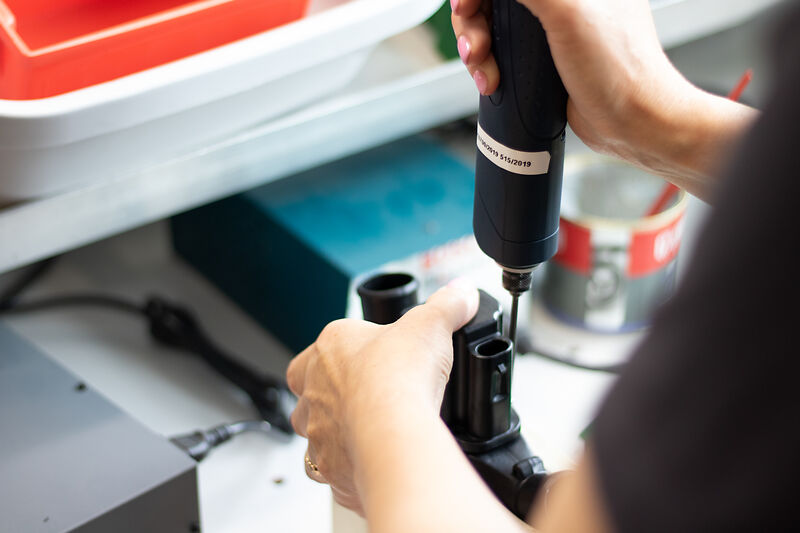
Our supporting processes enable comprehensive preparation of plastic and rubber components, delivering fully finished parts that are either ready for assembly or already assembled.
We offer a wide range of finishing operations, including cutting, deburring, precision finishing, and cryogenic deburring, which ensures exceptionally clean edges and removes any residual flash from molded rubber components. Heat-setting processes stabilize material properties, eliminate internal stresses, and enhance the thermal and chemical resistance of the products.
Additionally, we operate an in-house sandblasting and painting facility, allowing us to prepare surfaces for bonding rubber with metal components or with plastic parts.
Our five flexible assembly stations, covering a total area of over 200 m², allow us to carry out subassembly operations, integrate components made of plastics, rubber, and metal, and perform quality inspection of completed assemblies. The synergy of these processes—from molding through processing, finishing, and assembly—significantly reduces logistics costs, shortens lead times, and minimizes quality risks, providing the customer with a complete, optimized solution in one place.
Machine Park
- Compression and Transfer Molding:
- 12 hydraulic presses
- Maximum tool dimensions: 700x700 mm
- Up to 350 T clamping force
- Rubber Injection Molding Machines:
- 11 injection molding machines
- Maximum tool dimensions: 1200x800 mm
- Up to 1000 T clamping force
- Up to 25 l injection volume
- Plastic Injection Molding Machines:
- 7 injection molding machines
- Up to 450 T clamping force
- Up to 1.6 l injection volume
- Assembly:
- 5 independent assembly stations
- over 200 m² of assembly space
- Supporting Processes:
- Sandblasting
- Painting
- Post-curing
- Freezing
- Finishing
Materials
Rubber
- Types of processed compounds:
- NR
- EPDM
- SBR
- NBR
- VMQ
- FKM
- HNBR
- AEM
- ECO
- Others
- Hardness range:
- From 25 up to 88 ShA
- Special requirements:
- FDA
- UL 94
Plastic
- Types of processed granulates:
- PP
- PA
- PC/ABS
- POM
- PBT
- TPU
- TPE
- Others
- Reinforcements:
- Up to 30% GF
- Special requirements:
- UL 94